Explore a seemingly simple yet richly profound food - Chow Mein. It is not merely a dish, but also a global cultural exchange history written on the plate.
Chapter 1: Originating from the East - The Chinese Roots of Fried Noodles
To understand the story of fried noodles, we must first return to its homeland: China.
The term "fry noodles" originated from the Chinese word "chǎo mian", where "fry" means "stir-fry" and "noodles" simply refers to "noodles". Its emergence was closely linked to two crucial Chinese inventions: noodles (with a history of over four thousand years) and iron pots (suitable for high-temperature quick-fry cooking methods).
The fried noodles might have originated in the northern part of China. However, as the historical process unfolded, it underwent significant development and refinement in the Guangdong (Cantonese cuisine) region. The superb "wok hei" (extremely high temperature quick-frying) skills of the chefs in Guangdong - that is, the unique and concentrated flavor produced instantly on the ingredients through extremely high temperatures in the wok - became the soul of the fried noodles.
The traditional Chinese fried noodles come in two main forms:
Stir-fried noodles: The noodles are stir-fried together with a rich sauce, meat (such as chicken, beef, pork), seafood (such as shrimp, scallops), and fresh vegetables (such as bean sprouts, Chinese cabbage, and onions). The sauce is thick and the noodles are soft and smooth.
Crispy Fried Noodles: The noodles are first pressed into a round shape and then fried or pan-fried until golden and crispy. Afterwards, the thick sauce (Topping) is poured over them. When eating, the crispy noodles will absorb the sauce, creating a wonderful contrast in taste.
With the footsteps of Chinese immigrants in the 19th and early 20th centuries, this dish, carrying the flavor of home, embarked on its global journey and spread across the world, evolving into an astonishingly diverse array of styles.
Chapter 2: Crossing Oceans - The Global Variations of Stir-Fried Noodles
When stir-fried noodles encounter different cultures, ingredients and flavors, it takes on a completely new life.
1. American Chow Mein
This might be the most well-known version in the Western world. Early Chinese immigrants adapted to the American ingredients and tastes by creating this "American Chinese food". It usually consists of soft noodles cooked with bean sprouts, celery, onions and meat slices, seasoned with soy sauce, and has a slightly sweet taste. It is often served with crispy "fried noodle pieces" (Crispy Noodles). Especially "canned chow mein", it has become a unique symbol of post-war family fast food culture.
2. Canadian (especially Montreal) fried noodles
In Montreal, fried noodles have developed a very unique form. It usually uses bean sprouts as the main ingredient, combined with a small amount of chicken, beef or shrimp, with a light sauce and a sweet flavor. It is almost a must-have on the menus of local Chinese restaurants and has become a unique comfort food for the people of Montreal.
3. British Chow Mein
In British Chinese takeaways, fried noodles are one of the "national dishes". They are usually yellow egg noodles, quickly stir-fried with mixed vegetables (commonly including bean sprouts, carrot shreds, and peas), chicken or beef, and the sauce is relatively mild. It is often served together with fried rice and chips, forming a classic "set meal", demonstrating the integration of British culinary culture.
4. Japanese Yakisoba
Although the name contains "Soba" (rye wheat), Japanese yakisoba uses wheat noodles that have been steamed and oil-coated. Its flavor is very unique, using a special yakisoba sauce based on Worcestershire sauce, with a sweet and savory taste. It is often paired with pork slices, cabbage, carrots, and red ginger shreds. In the most classic version, it is also sprinkled with nori powder and garnished with pickled red ginger. Sometimes, a fried egg is added as well. It is not only a restaurant delicacy but also a favorite among street food, family gatherings, and home-cooked meals.
5. Indian Chow Mein
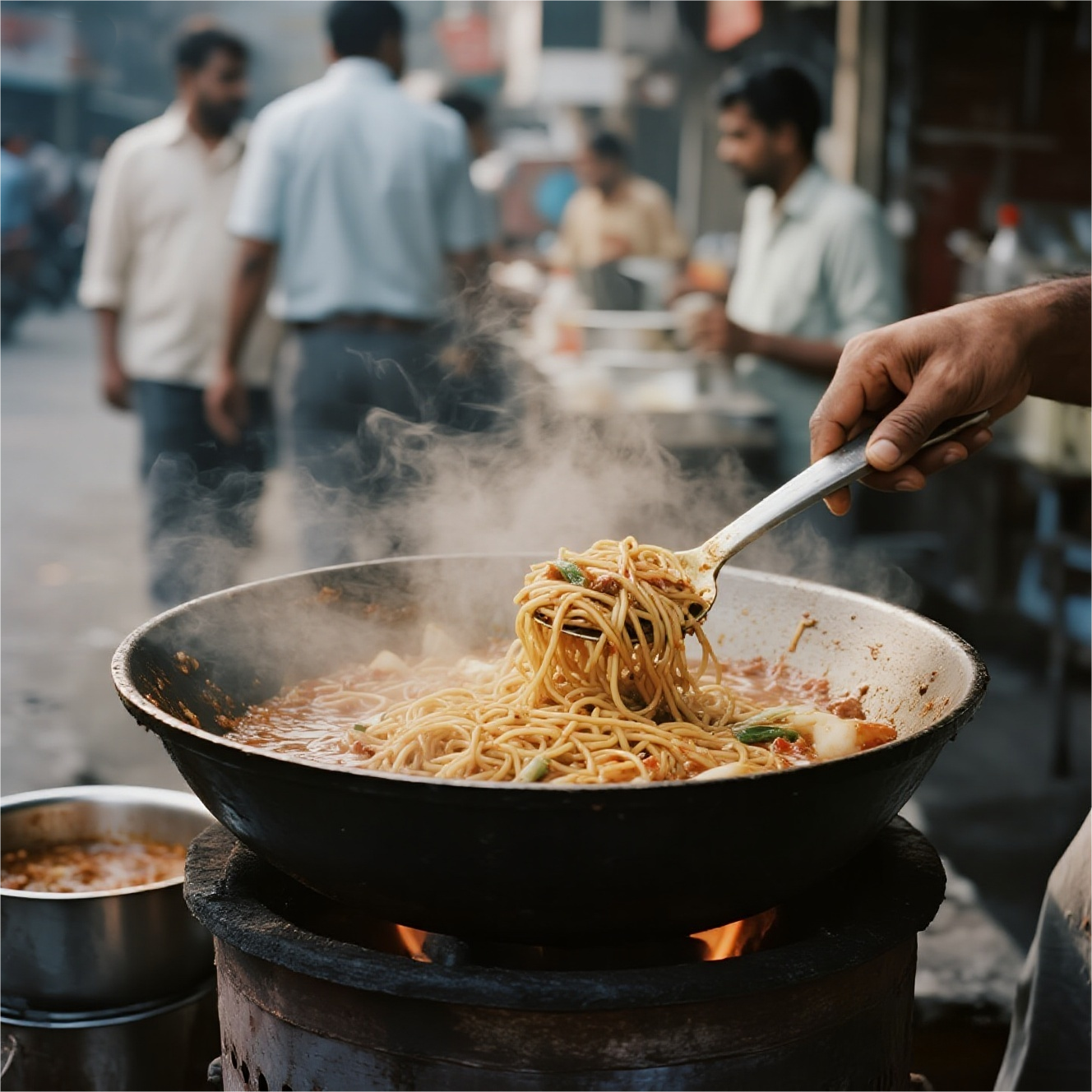
Chow mein was introduced to India through the China-India border and has become extremely popular in the street food culture of India. It is full of Indian flavor: the noodles are stir-fried with chili peppers, onions, carrots, and chili sauce over high heat. Indian spices such as turmeric, chili powder, and cumin are often added to the seasoning, giving it a spicy, sour, and stimulating taste. It is one of the most different and most local variations from the original version.
6. Southeast Asian Fried Noodles (such as Singapore Fried Rice Noodles, Thai Fried Rice Noodles Pad See Ew)
Although the names are different, the cooking concepts are closely related. Singapore Fried Rice Noodles are famous for their aroma of curry powder; while Thai Pad See Ew uses wide rice noodles and is cooked with dark sweet soy sauce. It has a salty-sweet taste with a "charcoal aroma". It is a daily delicacy for the people of Thailand, served with Chinese broccoli and eggs.
Chapter 3: Integration and Innovation - Modern Stir-Fried Noodles
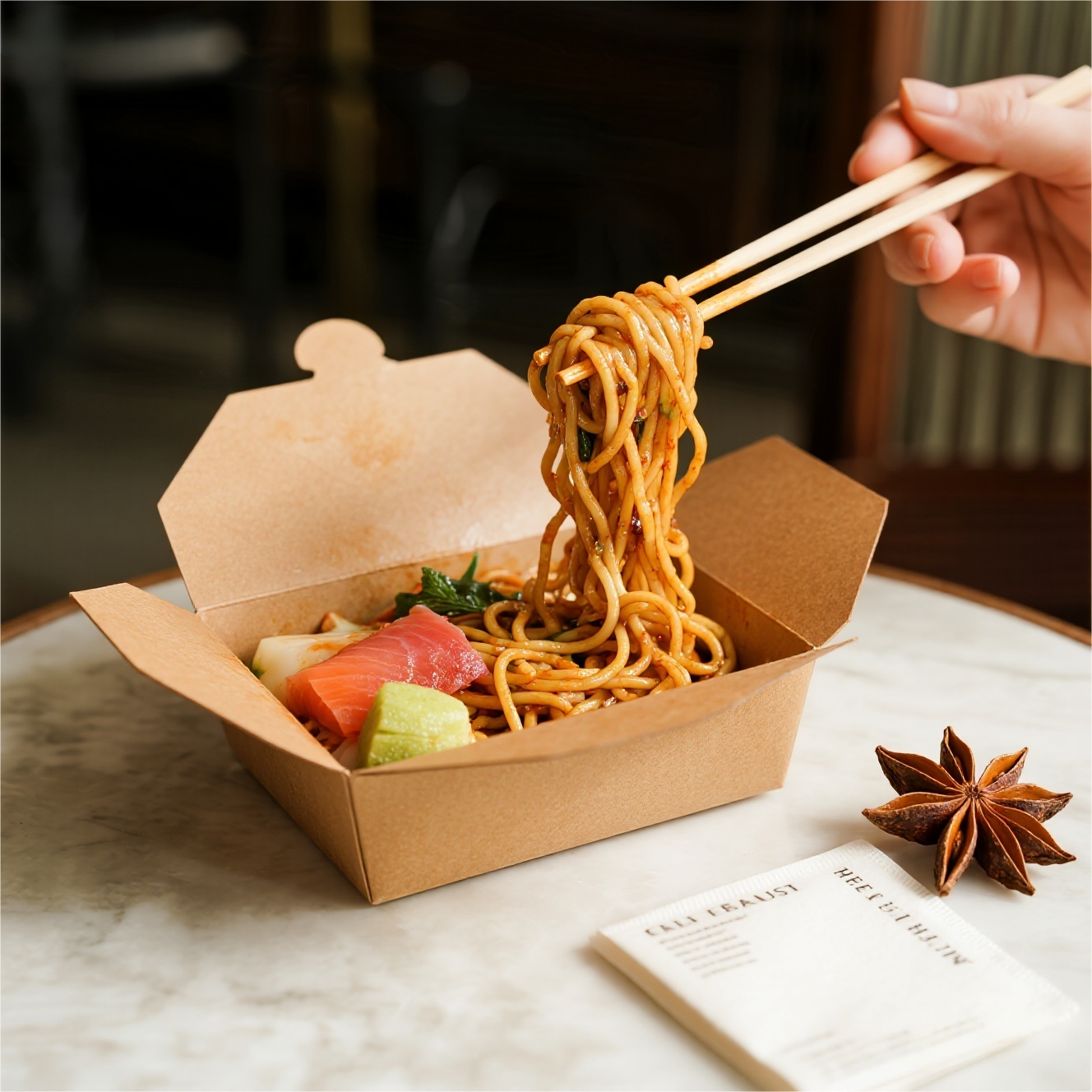
Today, the story of stir-fried noodles continues. It has become the perfect canvas for "Fusion Cuisine". Chefs use quinoa noodles and zucchini noodles to cater to the trend of healthy eating; they add Mexican chili peppers, Italian herbs, and Korean chili sauce to create novel flavors. From high-end restaurants to home kitchens, stir-fried noodles prove that food has no borders. It is constantly evolving and always brings us surprises.